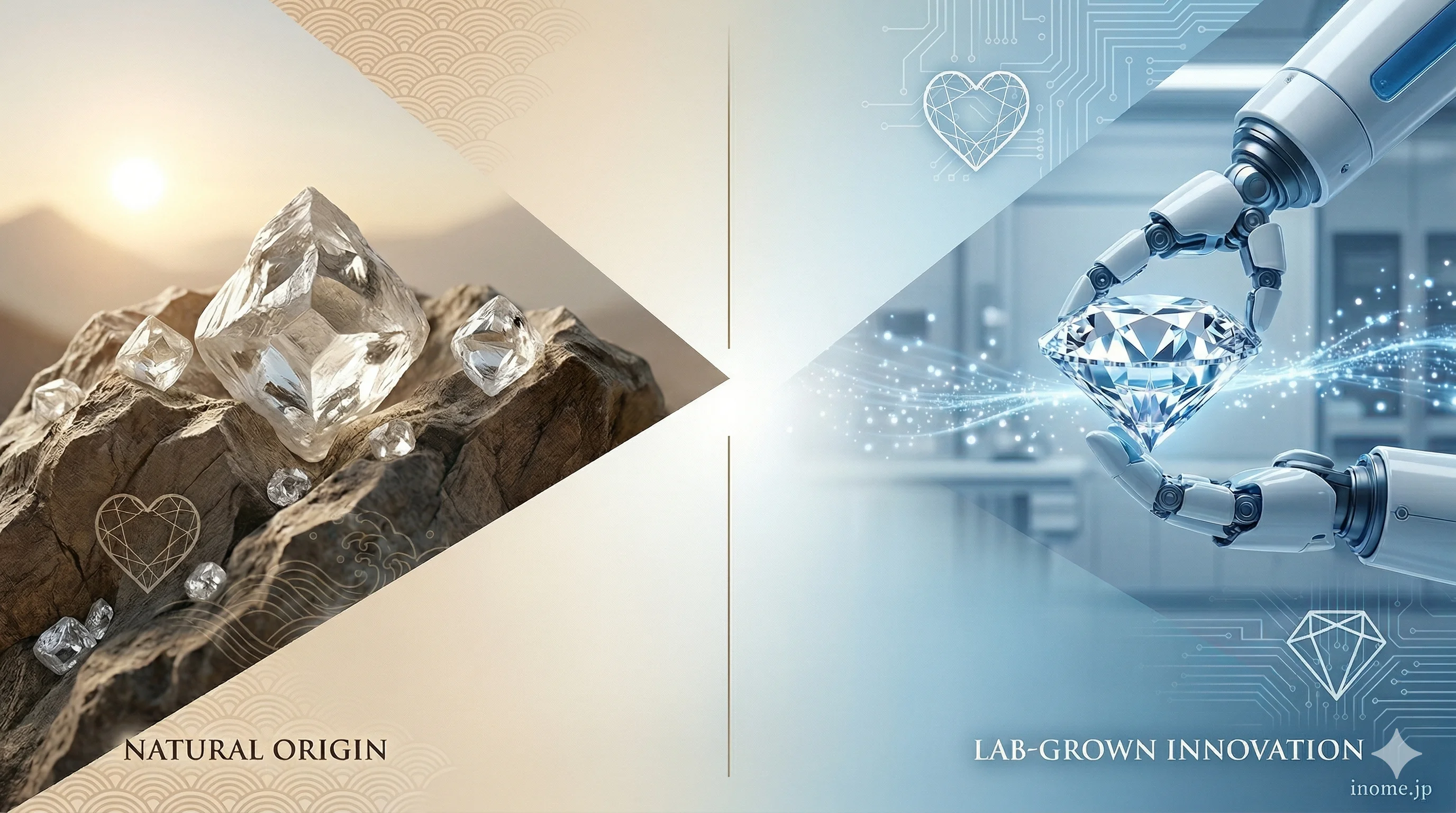
The most important difference between lab-grown diamonds and natural diamonds is origin. Natural diamonds are formed deep within the earth over immense spans of time, while lab-grown diamonds are cultivated in highly controlled research facilities using advanced technology.
Key Takeaways
- Natural diamonds and lab-grown diamonds share nearly the same visual and material properties.
- Specialized gemological institutions can distinguish the two by examining growth history and microscopic traces.
- Modern production mainly relies on HPHT and CVD methods.
- Clear disclosure, grading, and laser inscription are essential for consumer confidence.
Origin Defines the Story
Natural diamonds belong to the history of the earth. Lab-grown diamonds belong to the history of modern innovation. Both can hold value in the market, but they carry different narratives and emotional meanings.
Why They Look So Similar
Lab-grown diamonds are not simulants. They share the same crystal structure as natural diamonds and therefore express closely aligned optical, physical, and chemical properties. That is why their brilliance can feel just as compelling in fine jewelry.
Identification and Disclosure Matter
Because the appearance is so close, proper grading and clear disclosure matter. Trusted laboratories can distinguish growth history through advanced testing, and laser inscriptions or grading reports help communicate origin with confidence.
A Modern Choice in Luxury
Choosing between natural and lab-grown diamonds is not about reducing beauty to a simple binary. It is about understanding the facts, clarifying your own values, and selecting the kind of story and brilliance that feels most meaningful to you.